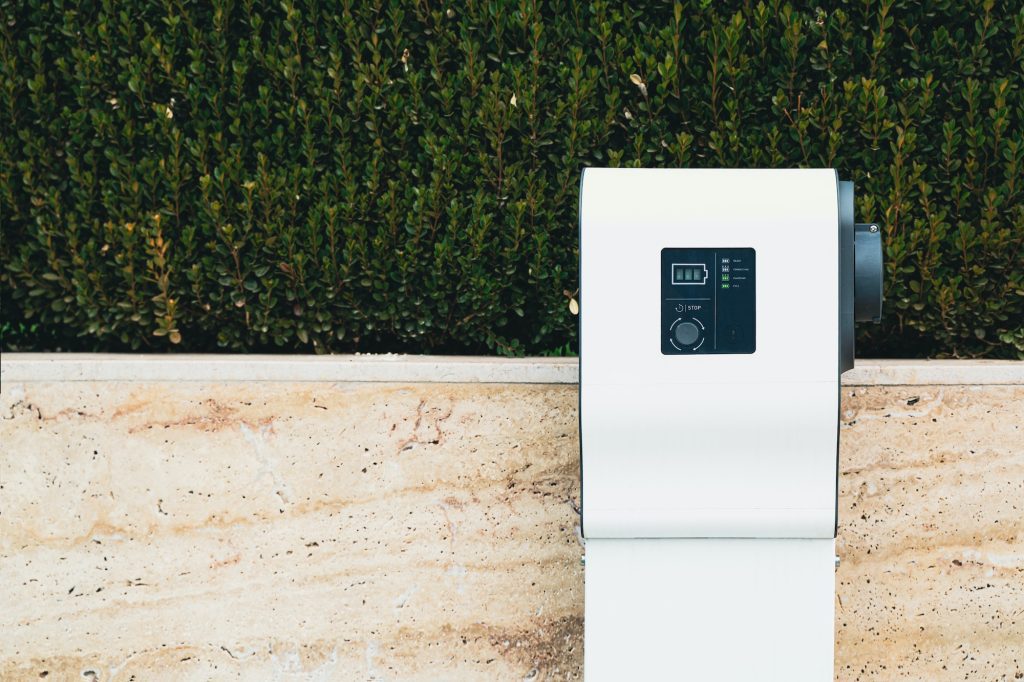
EV charger installation cost in Canberra comes down to five things: the type of charger, whether your home has single-phase or three-phase power, how far the charger sits from the switchboard, whether the switchboard can carry the extra load, and whether you want the charger to work with solar. The charger itself is only one part of the quote.
Below, we explain each cost driver in plain terms, so you know what to expect before an electrician walks through the door.
How Much Does It Cost to Install an EV Charger?
The honest answer is a range, set by your home rather than the charger. Most Canberra installs land in one of three bands:
- Lower end: a 7 kW single-phase wall charger mounted in a garage right next to the switchboard, with spare capacity and space on the board for a new circuit.
- Middle: a longer cable run to a carport or driveway, an outdoor-rated mount, or a few switchboard changes to make room for the new circuit and its protection.
- Upper end: a full switchboard upgrade, a three-phase supply upgrade through Evoenergy, trenching to a detached garage, or a solar-aware charger tied into an existing solar and battery system.
Two neighbours with the same car and the same charger can get very different quotes. The house is what changes, and our EV charger installation in Canberra service quotes every job on site for that reason.
What Moves EV Charger Installation Cost in Canberra?
Every quote comes from the same handful of variables. Here’s how each one affects the job.
Charger Type and Power Output
A Level 1 charger is the portable cable that comes with many EVs and plugs into a standard power point. It’s slow and not designed for a full charge every night.
A level 2 EV charger installation is what most Canberra homeowners book. These wall-mounted units run on a dedicated circuit and come in two main sizes:
- 7 kW single-phase: the most common home charger. It suits most daily driving and works on the single-phase supply most homes already have.
- 11 kW or 22 kW three-phase: faster, but only useful if your home has three-phase power and your car can accept that much AC power.
That last point catches people out. Many EVs limit how much AC power their onboard charger can take, so a 22 kW wall box can charge some cars no faster than a 7 kW unit. Check your car’s maximum AC charging rate before paying for the bigger charger.
Single-Phase or Three-Phase Supply
Most Canberra homes run on single-phase power, which handles a 7 kW charger comfortably. According to Evoenergy, chargers above 7 kW call for an upgrade from single-phase to three-phase power, which Evoenergy handles through its basic design application. That adds network work, approval time and electrical work at the meter and board, so it’s one of the biggest swings in any quote.
Cable Run and Mounting Location
Distance from the switchboard matters. A charger on the garage wall beside the board needs a short cable run. A charger on a carport post across the driveway, or in a detached garage at the back of the block, needs a heavier cable over a longer distance, conduit, and sometimes trenching under paving or lawn.
Outdoor installs need a weather-rated charger and isolator, and sometimes a pedestal mount.
Not sure what your install needs?
We can check your supply, switchboard and cable run on site, then give you a free, itemised quote before any work begins.
Will I Need a Switchboard Upgrade for an EV Charger?
Not always, but plenty of older Canberra homes do. A home EV charger draws a large current for hours at a time, so the board has to have the capacity, the physical space and the right protection for a new dedicated circuit.
Signs your board may need work before a charger goes in:
- Ceramic rewireable fuses instead of circuit breakers, still common in 1970s and 1980s homes across Belconnen and Woden
- No safety switches (RCDs), or no room on the board for a new breaker and its protection
- A board already crowded by a split system, induction cooktop or electric hot water
Where the board is sound but the total load is tight, a charger with load management can sometimes avoid a full upgrade. It watches the home’s demand and throttles charging back when the oven and air conditioner run at the same time. Where the board is old or unsafe, a switchboard upgrade is the right fix, and it sets the home up for future electrification too.
Does Pairing a Charger With Solar Change the Cost?
Yes, a little at install, and potentially a lot over time. A solar-aware charger uses a current sensor at the switchboard to see how much your panels are producing, then charges the car from surplus solar instead of exporting it to the grid.
The extra cost comes from the smarter charger hardware and the sensor wiring, not from major electrical work. If you’re planning residential solar installation or a solar battery in the next few years, tell your electrician now, so the charger and cabling suit the system you’ll end up with. You can also link charging schedules into smart home automation to keep car charging away from peak tariff times.
Permits and Compliance for EV Chargers in the ACT
Every EV charger in the ACT has to go in on a dedicated circuit, installed by a licensed electrician to the Australian wiring rules. That compliance work is part of the job, not an optional extra.
What it involves in Canberra:
- Testing and certification: the electrician tests the new circuit and lodges a Certificate of Electrical Safety with Access Canberra within 14 days, with a copy for you
- Access Canberra audits: Access Canberra electrical inspectors audit new installations and spot-check completed work
- Network approval: a three-phase upgrade needs Evoenergy approval before the supply changes
- Strata and rental approval: townhouses and apartments, common around the Gungahlin town centre, usually need body corporate sign-off, and tenants need the owner’s written approval
For property managers, the certificate is the paperwork that matters. Keep it on file with the property records.
How to Keep Your Home EV Charger Installation Cost Down
A few decisions made before the quote make a real difference:
- Match the charger to the car. A 7 kW unit suits most EVs on single-phase power.
- Park close to the board. Mounting the charger near the switchboard shortens the cable run.
- Bundle the work. A switchboard upgrade, solar and charger planned together cost less than three separate visits.
- Plan for a second EV. Running cable sized for a future second charger now saves opening walls again later.
- Ask for an itemised quote. You’ll see what’s charger, what’s cable and what’s board work.
The ACT Government’s Sustainable Household Scheme has offered zero-interest loans that can cover EV chargers. Eligibility and suppliers change, so check the current details on the ACT Climate Choices website. For help choosing the unit itself, read our tips for choosing an EV charger, or see what to expect during home electrification if the car is part of a bigger move off gas.
Get Your EV Charger Installed Properly
Licensed EV charger installation across Canberra, Gungahlin and Belconnen, backed by a lifetime warranty on workmanship.